
6 Things To Consider When Planning A Hybrid Event

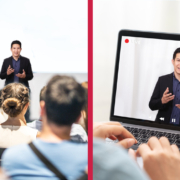
Hybrid events aren’t a new phenomenon, but how we plan and organise them is. Hybrid events in 2019 were usually a live stream of keynote speeches that were broadcast to people who couldn’t make it to the in-person event. This is because the live stream was for the minority of delegates. In 2021, that concept is flipped on its head and now the broadcast of the event is for the majority of delegates. To help you with the planning process, here are 6 things to consider for your next hybrid event.

Venues

Venue-sourcing for hybrid events is different from in-person events. You need to ensure that the venue you select has a high tech infrastructure that can support the technical requirements of broadcasting. Depending on how you organise your event, you may require venues in more than one location that meet the same requirements.

Audience Engagement

It can be easy for the speakers to just interact with the audience sitting right in front of you at a hybrid event, but you’re missing out on the vast majority of your audience. Consider implementing a live polling system to allow speakers to interact with both audiences.

Speakers

It is likely that you will have remote speakers at your hybrid event, so make sure to have enough audio-visual equipment at the venue for the in-person delegates to hear and see the speaker clearly.

Networking

You need to consider not only the networking opportunities for your in-person delegates or your virtual delegates but also how you can encourage your in-person delegates to network with your virtual delegates. To do this, you need to schedule in breaks and activities that bring both audiences together.

Sponsorship

To provide both in-person and virtual audiences with access to sponsors, you will need to provide a virtual sponsor booth as well as space at the venue. Speak with your sponsors early on so that they are prepared with enough staff to cover both booths.

Branding

Ensure a seamless experience for your audience by ensuring that your branding is consistent both at the venue and on the virtual platform.

If you’re planning a hybrid event, get in touch for free venue-sourcing and a free demo of our virtual event solution.
Tell Us About Your Virtual Event

About You


Backstage at a Virtual Studio

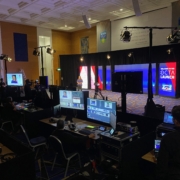
Last year we launched Octa with a virtual launch event. We used two virtual studios to provide our delegates with a fantastic immersive experience. While we had been managing virtual events for clients for some time before our own event, it was a learning curve for us when we had to move from behind the cameras to onstage. It was a fantastic experience for us to better understand how our clients, their guests, and speakers may feel presenting at a virtual event.

You get nervous!

When you step into a virtual studio, it feels like you’re stepping onto a tv set. There are strong lights, lots of cameras, and a team of production specialists. It’s ok to feel nervous. If you’re used to getting on stage and giving keynotes at a large conference, you might be good with all of that, but it is different. You can’t just walk across the stage to release these nerves as you need to be captured by the cameras for the audience to see you on the screen.

Let the production team direct you

The production team are experts in their field. They want to you to appear and sound fantastic on camera. If they ask you to move an inch to the left, it’s because the frame or angle is better. They consider you, your background, and your audience. If you’re moving across the virtual studio, they’ll teach you how to turn and they’ll go through it several times until you get it just right.

It’s ok to make mistakes

Mistakes are inevitable. You might move the wrong way, face the wrong camera, say the wrong words or get stage fright. This is all ok. This is also why its so important to plan rehearsals. The more time you have to rehearse, the more time you have to iron out all of the little things that can go wrong. If you’re event is pre-recorded, you can keep going until you get it right. If your event is being streamed live, then you need to rehearse enough that you’re comfortable and confident with what you have to do. It’s always good to do a run through an hour or so before the live session, if at all possible.

Virtual studios provide a phenomenal experience for both the audience and the speakers allowing for TV quality production. If you’re hosting a virtual event, request a demo to discuss your requirements.